What an Agent Harness Needs Before Production: Eleven Failures and the Part That Stops Each

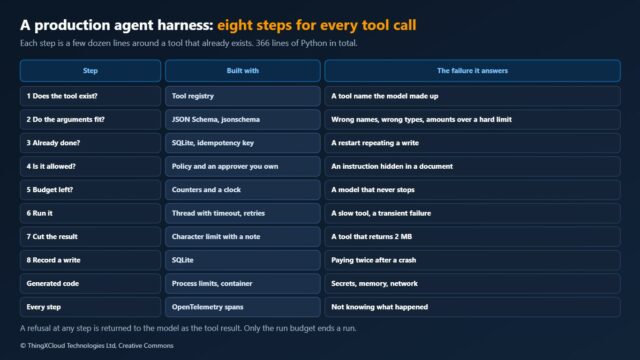
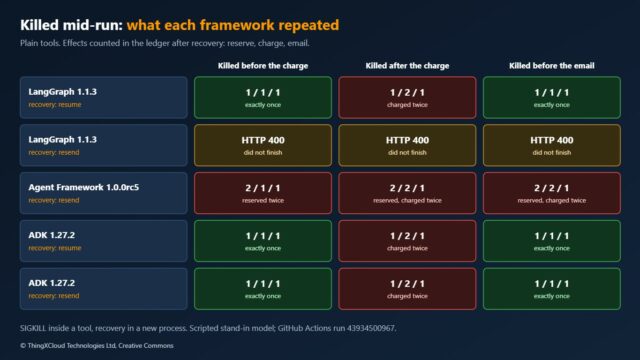
An agent harness is the code around the model. A bare twenty-line loop meets eleven bad days: a runaway model, bad arguments, a slow tool, a hidden instruction, generated code that reads secrets, a crash after a refund. Then the eight parts that stop them, built with JSON Schema, SQLite, OpenTelemetry, process limits and a container.

AI/ML14 min read

RAG over FHIR Data on AWS HealthLake and Azure Health Data Services: Retrieval That Respects the Record

A FHIR record is a graph of coded, dated, status-bearing resources, not a document corpus. This article sets out a retrieval design for generative AI over FHIR data: FHIR search for exact questions, similarity search for notes, pinned allergies and medication, a hard partition by patient, and citations on every statement. Tested on synthetic data and mapped to AWS HealthLake and the Azure Health Data Services FHIR service.

Hosting Remote MCP Servers Securely on AWS and Azure: Token Validation, Gateways and Network Placement

A remote MCP server is an API that a language model can drive. This article covers the three things that decide whether it is safe: what the MCP authorization specification requires of the server, where to host it on AWS and Azure and who validates the token in each case, and where the endpoint belongs on the network. Includes a tested Python resource server and an ASP.NET Core version for Entra ID.

.NET15 min read

A2A and MCP Across Clouds: Connecting a .NET Agent Framework Agent to an Agent on Bedrock AgentCore

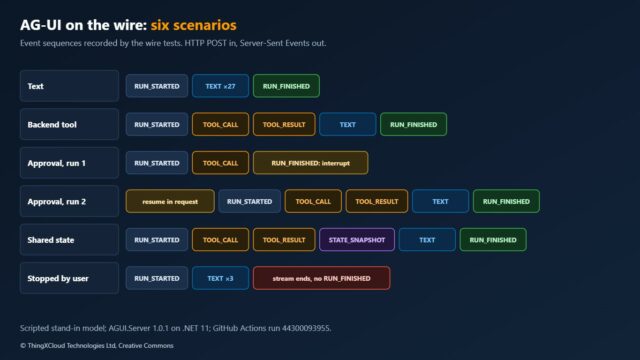
MCP connects an agent to its tools; A2A connects an agent to another agent. This article wires a .NET Microsoft Agent Framework coordinator on Azure to a Python agent and MCP tool server laid out for Amazon Bedrock AgentCore Runtime, and reports what broke: A2A 0.3 versus 1.0 version skew, identity across the cloud boundary, and task lifecycle handling.

.NET15 min read

Amazon S3 Vectors vs. OpenSearch Serverless vs. pgvector for RAG: Cost Floors, Query Bills and Tenant Isolation

All three AWS vector stores can now cost close to nothing at rest, but they bill and isolate tenants in very different ways. This comparison models Amazon S3 Vectors, OpenSearch Serverless (classic and next generation) and Aurora PostgreSQL with pgvector across three workload shapes, checks the S3 Vectors model against the worked examples on the AWS pricing page, and shows where the tenant boundary belongs in each.

Prompt Caching Economics on Amazon Bedrock and Azure OpenAI: Where It Pays and Where It Costs

Prompt caching cannot raise your bill on Azure OpenAI, but on Amazon Bedrock with Claude models a cache write costs more than not caching. This article derives the break-even points (one request per prefix every 20 minutes for the five-minute cache, every 80 minutes for the one-hour cache), gives a tested cost model, and shows how to measure cache read ratios on both platforms.

Taking a GenAI Assistant to Production on Amazon Bedrock: Knowledge Base, Fine-Tuning and Release Gates for Irish Healthcare

For an Irish health guidance assistant on Amazon Bedrock, published HIQA and HSE guidance goes into a Knowledge Base in eu-west-1, fine-tuning is kept for behaviour on non-personal data because Nova customisation runs in US Regions, and IHI and PPSN values are blocked by a dataset gate and a Guardrail. A Step Functions release pipeline promotes a change only after a golden-set evaluation and clinical sign-off.

AI/ML18 min read

Bedrock AgentCore Runtime vs. Lambda for Hosting Agents: Isolation, State and the Idle Bill

The same agent runs on AWS Lambda and on Amazon Bedrock AgentCore Runtime with two thin adapters. The differences are isolation, where conversation state lives and what is billed while the agent waits. AgentCore is cheaper for I/O-bound agents only if sessions are ended deliberately: left at defaults, idle memory makes it the more expensive option.

One Abstraction, Two Clouds: Microsoft.Extensions.AI over Azure OpenAI and Amazon Bedrock

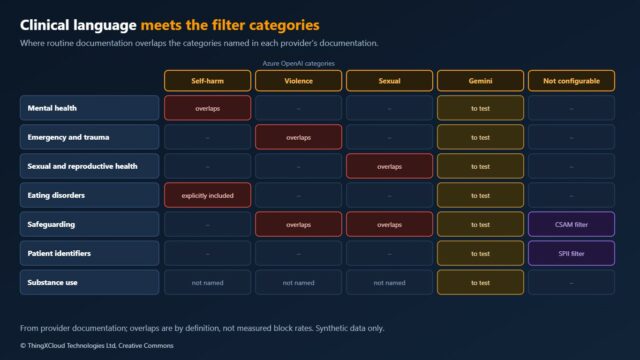
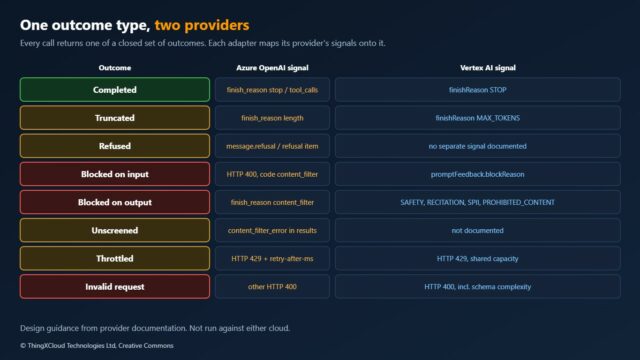
Microsoft.Extensions.AI gives .NET services one interface over Azure OpenAI and Amazon Bedrock. This article builds a two-provider ASP.NET Core service with per-provider telemetry, caching, token metering, tool calling and failover, and is clear about where the abstraction stops: model identity, errors, content safety and model behaviour remain provider-specific.

.NET14 min read

Breaking the 29-Second Wall: Serverless GenAI & Agent Backends on AWS

The API Gateway 29-second timeout is now a default, not a wall: REST APIs can stream for 15 minutes, and Lambda durable functions and Bedrock AgentCore handle work that runs for hours. This article sets out the current limits, three production patterns for long-running GenAI requests with tested code, and the concurrency and cost consequences of each.

Guardrails for Amazon Bedrock: Production Audits & Jailbreak Prevention

Relying on implicit system prompts to police large language models against hostile jailbreaks is fundamentally negligent. By 2026, enterprise architectures rely strictly on decoupled interception fabrics. Explore how Amazon Bedrock Guardrails programmatically neuters adversarial prompt injections, enacts real-time PII masking, and terminates factual hallucinations automatically.

AWS6 min read

Inferentia2, Trainium or NVIDIA GPUs for LLM Inference: Work Out the Cost per Token

Throughout 2024, deploying localized foundation models onto Nvidia H100 instances was considered mandatory—creating profound financial hemorrhage for enterprise inference endpoints. By 2026, transitioning production endpoints to AWS Inferentia silicon via the Neuron compiler reliably slashes operational cluster costs by over 70%. Here is the engineering matrix for abandoning CUDA and migrating to custom AWS AI hardware.

AWS9 min read

The Event-Driven GenAI Pattern: Asynchronous Bedrock Orchestration via Amazon EventBridge

Enterprise GenAI integrations are fatally exposed when treating foundation models like standard REST APIs. Integrating Claude 3.5 Sonnet directly to heavy UI components results in chronic HTTP timeouts. By early 2026, the industry standard relies on DynamoDB streams, EventBridge, and AWS Step Functions. Here is the practitioner blueprint for robust, asynchronous LLM orchestration at scale.

Amazon SageMaker Unified Studio: Is This the End of Fragmented MLOps on AWS?

For years, AWS Data Scientists suffered from cognitive fragmentation, bouncing between EMR, Glue, and SageMaker Studio Classic to orchestrate a single model. SageMaker Unified Studio solves the interface crisis by collapsing massive data-lake operations, Generative AI visual chains, and JupyterLab IDEs into a solitary workspace. Here is the practitioner evaluation on migrating legacy MLOps architecture into the unified future.

Model Context Protocol (MCP) on AWS: The New Architecture for Enterprise AI Agent Integrations

For years, integrating AI agents with enterprise data meant writing brittle, custom OpenAPI schemas and complex integration logic. In 2026, the open-source Model Context Protocol (MCP) acts as the ‘USB-C for AI.’ Here is the architectural retrospective on securely deploying MCP Servers via AWS Serverless to connect Amazon Bedrock and Q Developer instantly to secure proprietary data.